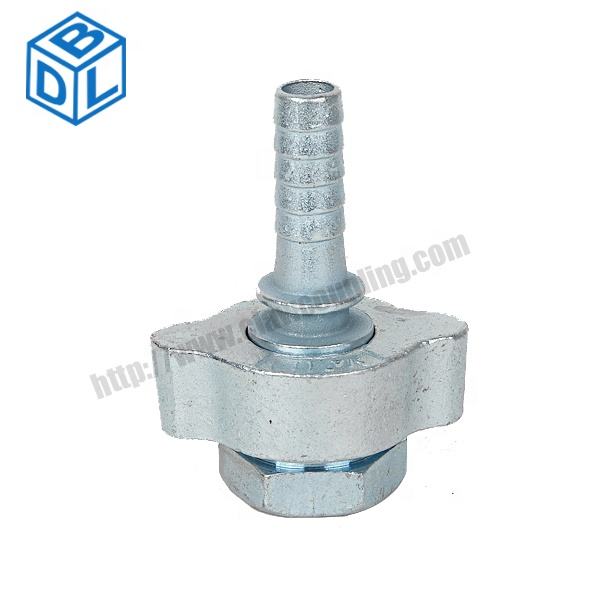
Internal thread joint
Internal Thread Joint - High-Quality Connection Solutions for Industrial Applications
Internal thread joints are essential components in piping systems, offering secure and leak-proof connections for various industrial applications. Our premium-quality internal thread joints are designed to withstand high pressure, extreme temperatures, and corrosive environments while maintaining excellent performance.
Product Specifications
Key Features:
- Precision-engineered threading for perfect fit
- Available in multiple sizes from 1/8" to 4"
- Material options: stainless steel, brass, carbon steel
- Pressure rating up to 3000 PSI
- Temperature range: -20°F to 400°F (-29°C to 204°C)
- Corrosion-resistant coatings available
- Compliant with ASME B1.20.1 standards
Technical Specifications Table:
| Size (inches) | Thread Pitch | Material | Working Pressure (PSI) |
|---|---|---|---|
| 1/8" - 1/2" | 27 TPI | Brass/Stainless Steel | 3000 |
| 3/4" - 1" | 14 TPI | Carbon Steel/Stainless Steel | 2500 |
| 1.5" - 2" | 11.5 TPI | Stainless Steel | 2000 |
| 2.5" - 4" | 8 TPI | Carbon Steel | 1500 |
Applications
Our internal thread joints are widely used in various industries:
- Oil and gas pipelines
- Chemical processing plants
- Water treatment systems
- HVAC systems
- Industrial machinery
- Hydraulic systems
Installation Guide
- Clean both the internal and external threads thoroughly
- Apply appropriate thread sealant or tape
- Hand-tighten the connection first to ensure proper alignment
- Use a wrench to tighten - typically 1/2 to 3/4 turn past hand tight
- Never overtighten as this may damage the threads
- Perform pressure test before full operation
Internal Thread Joint FAQ
What is the maximum temperature an internal thread joint can withstand?
Our standard internal thread joints can operate continuously in temperatures from -20°F to 400°F (-29°C to 204°C). For higher temperature applications up to 800°F (427°C), we offer special high-temperature models with different materials and coatings. The exact temperature rating depends on the material selection - stainless steel versions generally have higher temperature resistance than brass versions.
How do I select the right size internal thread joint for my application?
To select the proper internal thread joint size, you need to consider three main factors: the pipe outer diameter, the thread type (NPT, BSP, metric, etc.), and the required pressure rating. Measure the external threads of the pipe you're connecting to, and match it with our product specifications. For high-pressure applications above 1500 PSI, we recommend using stainless steel internal thread joints with a tapered thread design for better sealing performance.
What maintenance is required for internal thread joints?
Internal thread joints typically require minimal maintenance. We recommend periodic visual inspections for signs of leakage, corrosion, or thread damage. For systems with vibration or thermal cycling, re-tightening may be needed annually. Applying anti-seize compound during installation can prevent galling and make future maintenance easier. In corrosive environments, more frequent inspections (every 3-6 months) are advised to check for material degradation.
Quality Assurance
All our internal thread joints undergo rigorous quality testing including:
- Dimensional verification with precision gauges
- Pressure testing at 1.5x rated capacity
- Material composition analysis
- Surface finish inspection
- Thread form verification
Customization Options
We offer various customization options for internal thread joints:
- Special thread forms (acme, buttress, etc.)
- Non-standard sizes
- Special material grades (duplex stainless, hastelloy, etc.)
- Custom coatings (PTFE, nickel plating, etc.)
- Unique markings or branding